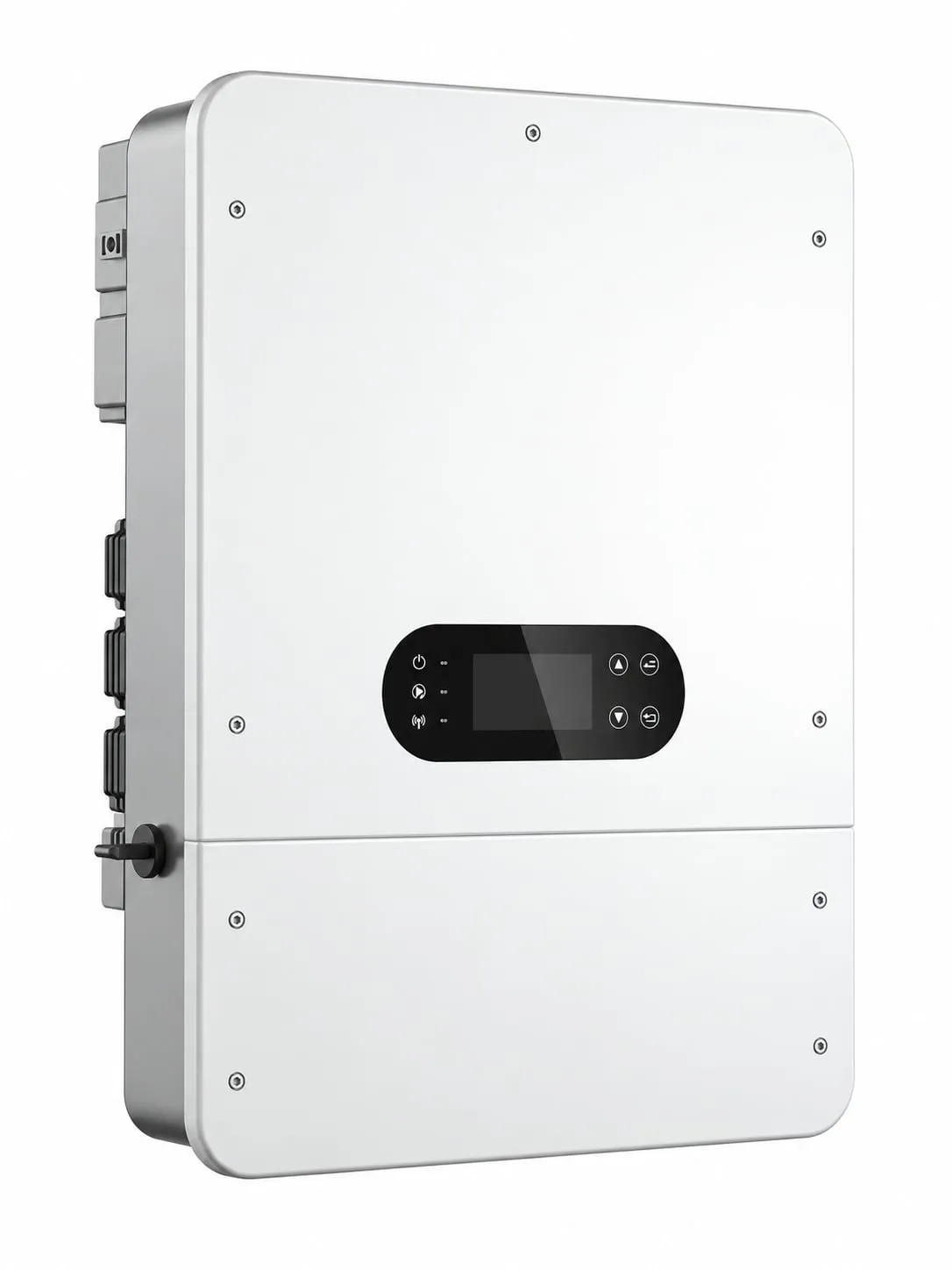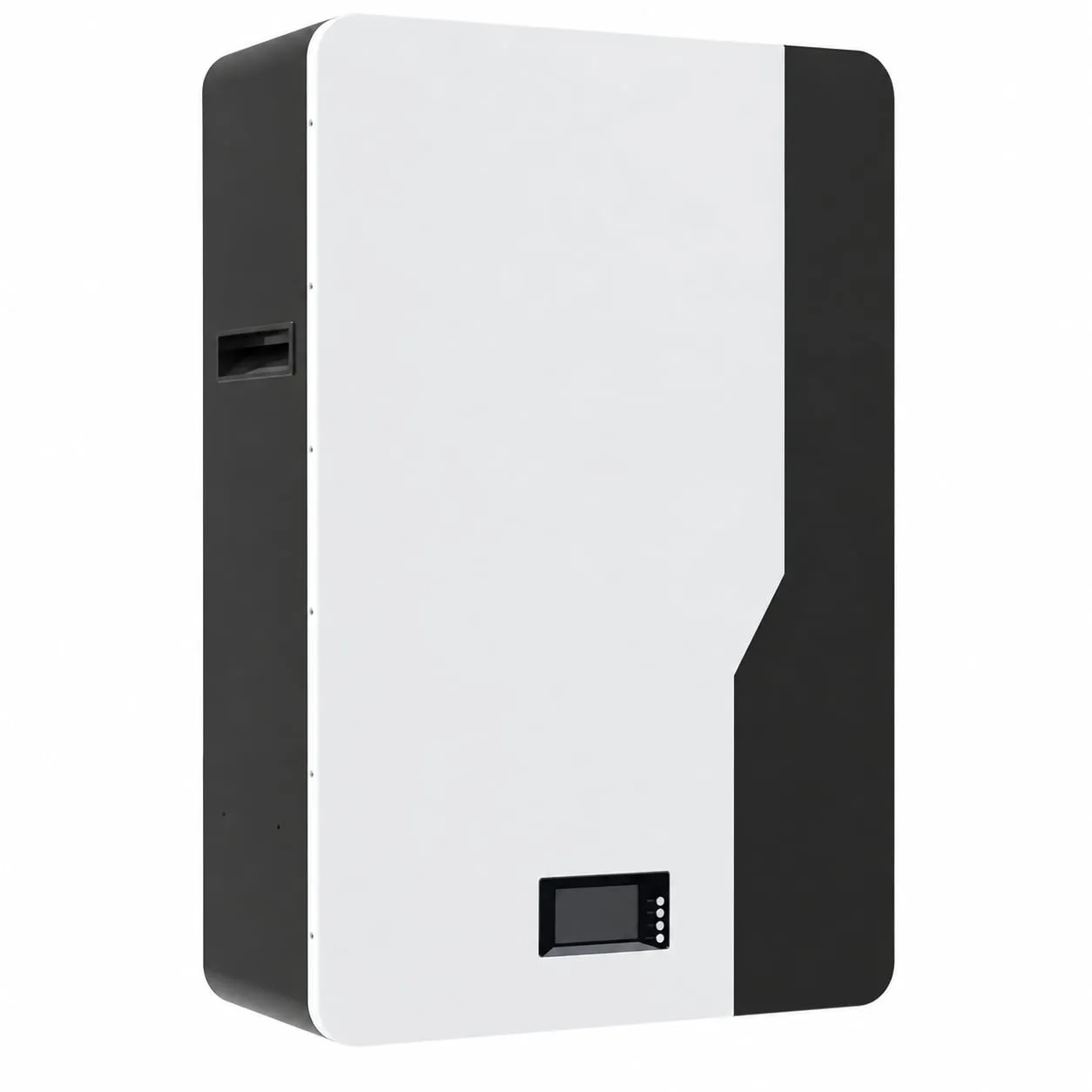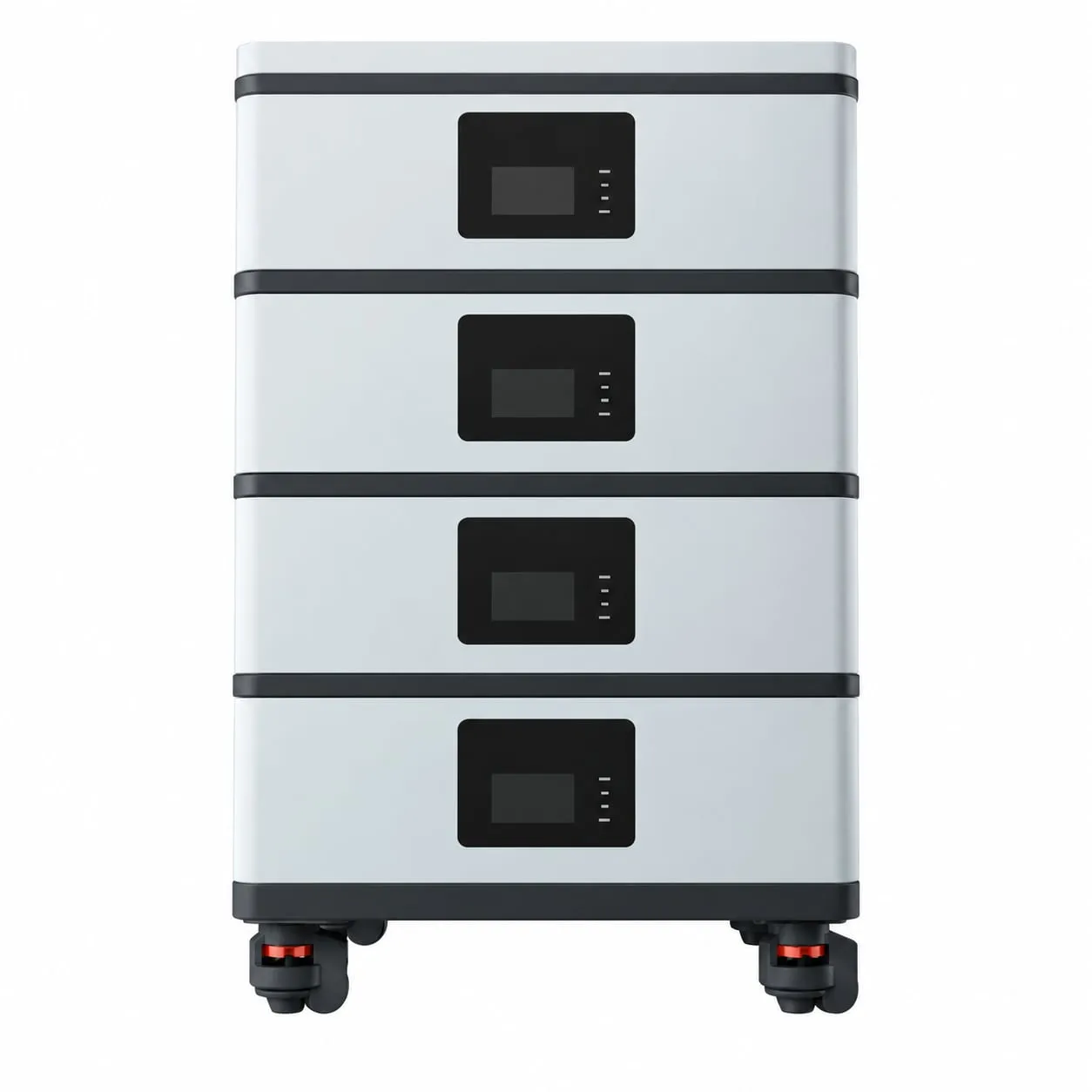
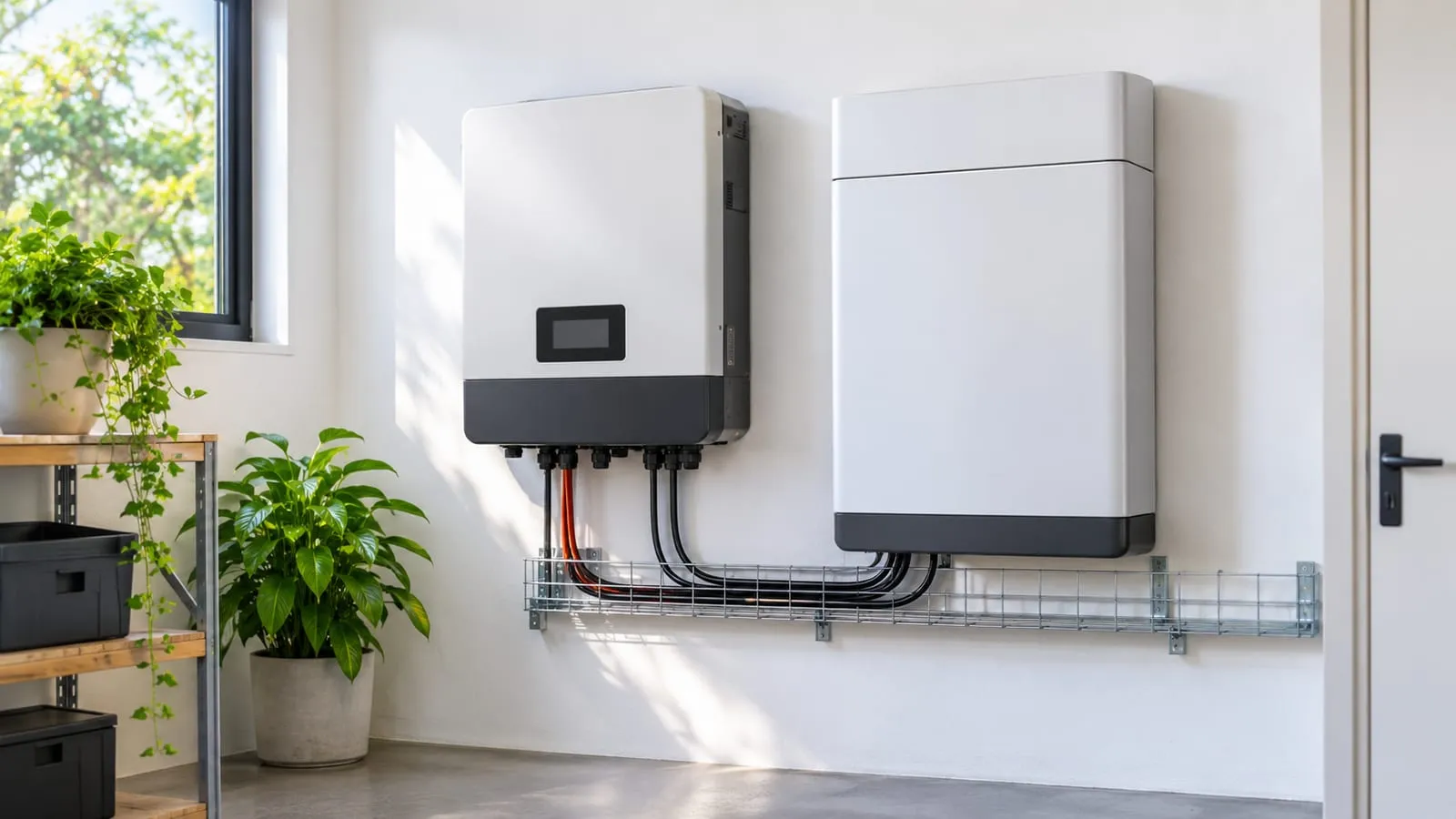
Short answer: A hybrid inverter is a solar inverter that can also run a battery. It turns the DC from your panels into AC for the house, charges the battery with any surplus, and — when the grid fails — disconnects from the grid and powers your essential loads from the battery. A normal on-grid inverter shuts down during an outage; a hybrid inverter keeps working.
What is inside the box
| Function | What it does |
|---|---|
| MPPT charge controllers | Track the best operating point of each PV string and feed the DC bus |
| Inverter stage | Converts DC to single-phase or three-phase AC |
| Battery converter | Charges and discharges the battery, talks to its BMS (CAN or RS485) |
| Grid / load switch | Isolates the house from the grid in an outage so the inverter can form its own supply |
| Energy management | Decides when to charge, discharge, export or import (self-consumption, peak-time, backup-first modes) |
Hybrid vs on-grid vs off-grid
| On-grid | Hybrid | Off-grid | |
|---|---|---|---|
| Works in an outage | No | Yes (essential loads) | Yes |
| Uses a battery | No | Yes | Yes |
| Needs the grid | Yes | Optional | No |
| Typical use | Cut bills where the grid is stable | Backup + self-consumption | Remote sites, no grid |
How to size one
- Continuous output: add the loads you want to keep running at the same time (kW). Choose an inverter that covers that with margin.
- Surge: motors and compressors draw several times their running power for a moment — check the inverter’s surge rating (often given for a few seconds).
- Battery voltage: most home hybrids use 48 V class low-voltage batteries; larger or three-phase models often use high-voltage stacks. The inverter and battery must be a supported pair.
- PV input: the array’s open-circuit voltage in the coldest weather must stay below the MPPT maximum.
- Phase: match the supply — single-phase, split-phase or three-phase.
Our hybrid inverters range from single-phase 3–5 kW units to three-phase and 100 kW commercial models; confirm the exact model against your site.
Three ways to build a hybrid system
| Layout | How it works | Best for | Watch out for |
|---|---|---|---|
| DC-coupled hybrid | PV and battery share one inverter; PV charges the battery directly on the DC side | New builds; the simplest and usually the most efficient path from panel to battery | The existing PV inverter cannot be reused |
| AC-coupled battery inverter | A battery inverter is added next to an existing grid-tied PV inverter | Retrofits where the PV system is already installed | Slightly more conversion steps; the two inverters must cooperate during an outage |
| All-in-one unit | Inverter, battery modules and controls in one cabinet | Small homes and quick installs | Capacity growth is limited to what the cabinet allows |
What the operating modes mean
Most hybrid inverters offer a few modes; the names differ by brand, the logic is the same:
- Self-consumption: solar feeds the house first, surplus charges the battery, only then export. Good where exports earn little.
- Backup-first (battery priority): the battery is kept charged for outages and used lightly. Good where outages are frequent.
- Time-of-use: charge from the grid when it is cheap, discharge when it is expensive. Needs a tariff with real price differences.
- Export limit / zero export: the inverter holds export to a set value when the utility requires it.
A worked example
A shop has a 6 kW roof array, a 5 kW hybrid inverter and a 10 kWh battery. Its loads: refrigeration 0.8 kW (runs about half the time), lighting and tills 0.6 kW, two fans 0.2 kW, and a small pump 0.75 kW for a few minutes a day.
- Continuous load while open: about 1.6–2.2 kW. The 5 kW inverter has plenty of margin, including for the pump’s start-up surge.
- Daytime: the array covers the load and charges the battery with the surplus.
- Evening outage: 10 kWh × 0.9 (usable) × 0.95 (efficiency) ≈ 8.5 kWh, which carries a 1.5 kW load for about 5–6 hours.
Ten checks before you buy
- Continuous and surge power, in kW and for how many seconds.
- Battery voltage range and the exact battery models on the compatibility list.
- Maximum charge and discharge current.
- MPPT count, maximum PV voltage and current per MPPT.
- Backup output: single, split or three-phase, and whether all phases are backed up.
- Transfer time from grid to battery.
- Parallel operation: how many units and which cables.
- Export control and meter support if the utility requires it.
- Monitoring app or portal, and whether it works without an internet subscription.
- Certificates, warranty and who services it in your country.
Common mistakes
- Choosing the inverter first and then discovering the battery you want is not on its list.
- Sizing for the average load and tripping on the start-up surge of a pump or air conditioner.
- Putting the whole house on backup when only the essential circuits need it, which forces an oversized battery.
- Forgetting that a grid-tied PV inverter on an AC-coupled system has to be told how to behave when the grid fails.
When you do not need one
If the grid is reliable and you only want to cut the bill, a cheaper on-grid inverter does the job. If you want to add a battery later, a hybrid inverter or an AC-coupled battery inverter keeps that door open.