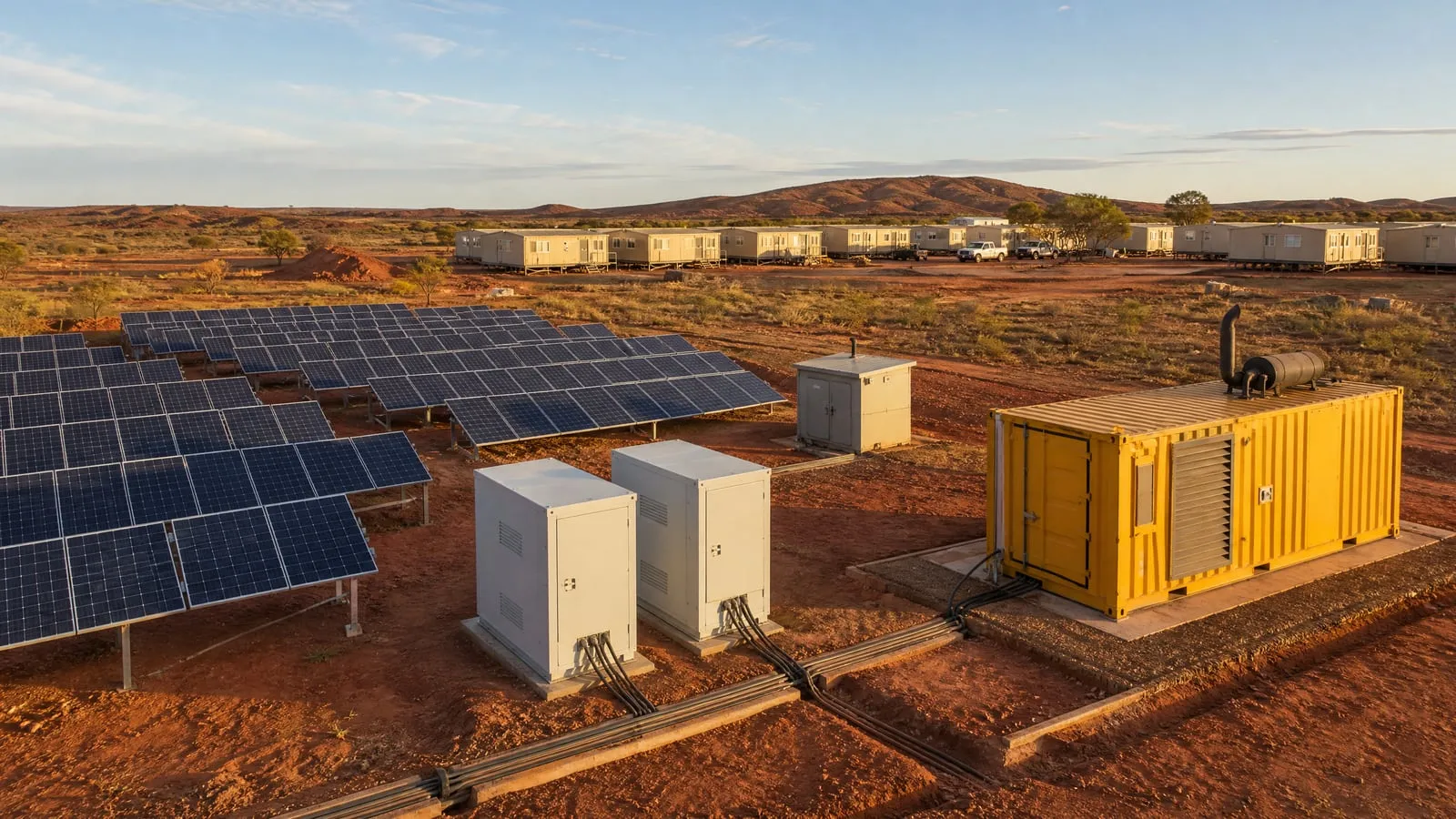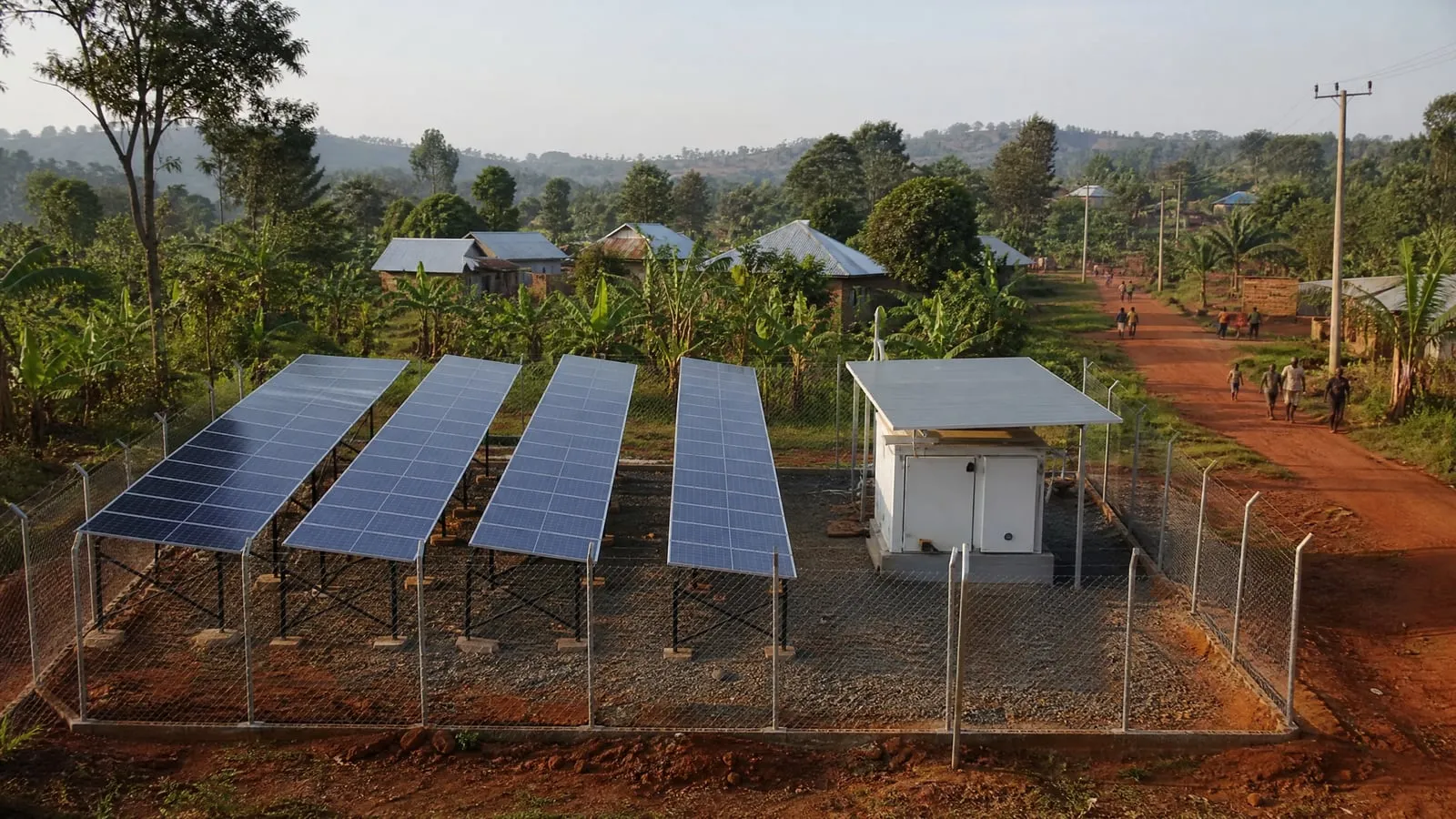
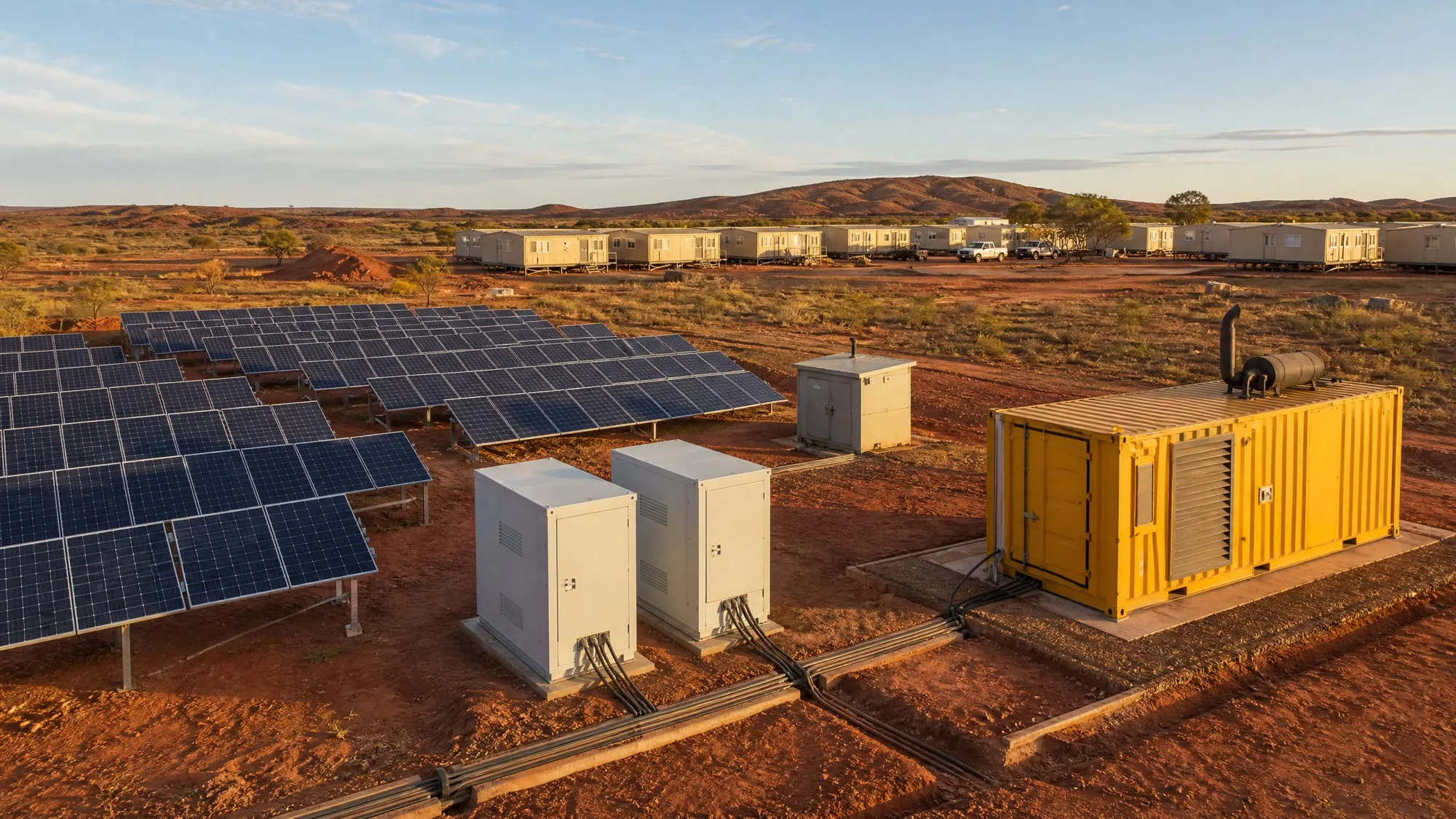
Short answer: A solar-diesel hybrid microgrid combines PV, battery storage, grid-forming inverters and your existing diesel generators under one controller. Solar powers the site by day, the battery carries the evening, and the generator runs only when needed — at an efficient load. It suits mines, farms, islands, villages and telecom sites where the grid is weak or absent.
Why hybrids make sense where fuel is expensive
The International Energy Agency estimates that about 600 million people in Africa still lack electricity access, and sees grid extension, mini-grids and stand-alone systems all playing a part. For sites beyond the grid, diesel is often the default — and every litre has to be bought, trucked and guarded. Solar and storage cut that bill while keeping the generator’s reliability.
How the system is dispatched
| Time | Main source | Battery | Generator |
|---|---|---|---|
| Sunny day | Solar | Charging | Off |
| Evening / night | Battery | Discharging | Off |
| Long cloudy spell | Generator | Charging from surplus | On, at efficient load |
| Peak demand | Solar + battery | Supporting | Starts if needed |
Design inputs
- Load profile — daily shape and seasonal peaks.
- Solar resource — site irradiation and dust.
- Generator minimum load — running diesels lightly loaded causes wet stacking and damage.
- Redundancy — what must never go off (clinic, process plant, telecom).
- Fuel logistics — the delivered price per litre drives the economics.
- Local operation — who will clean panels, read alarms and change filters.
What we supply
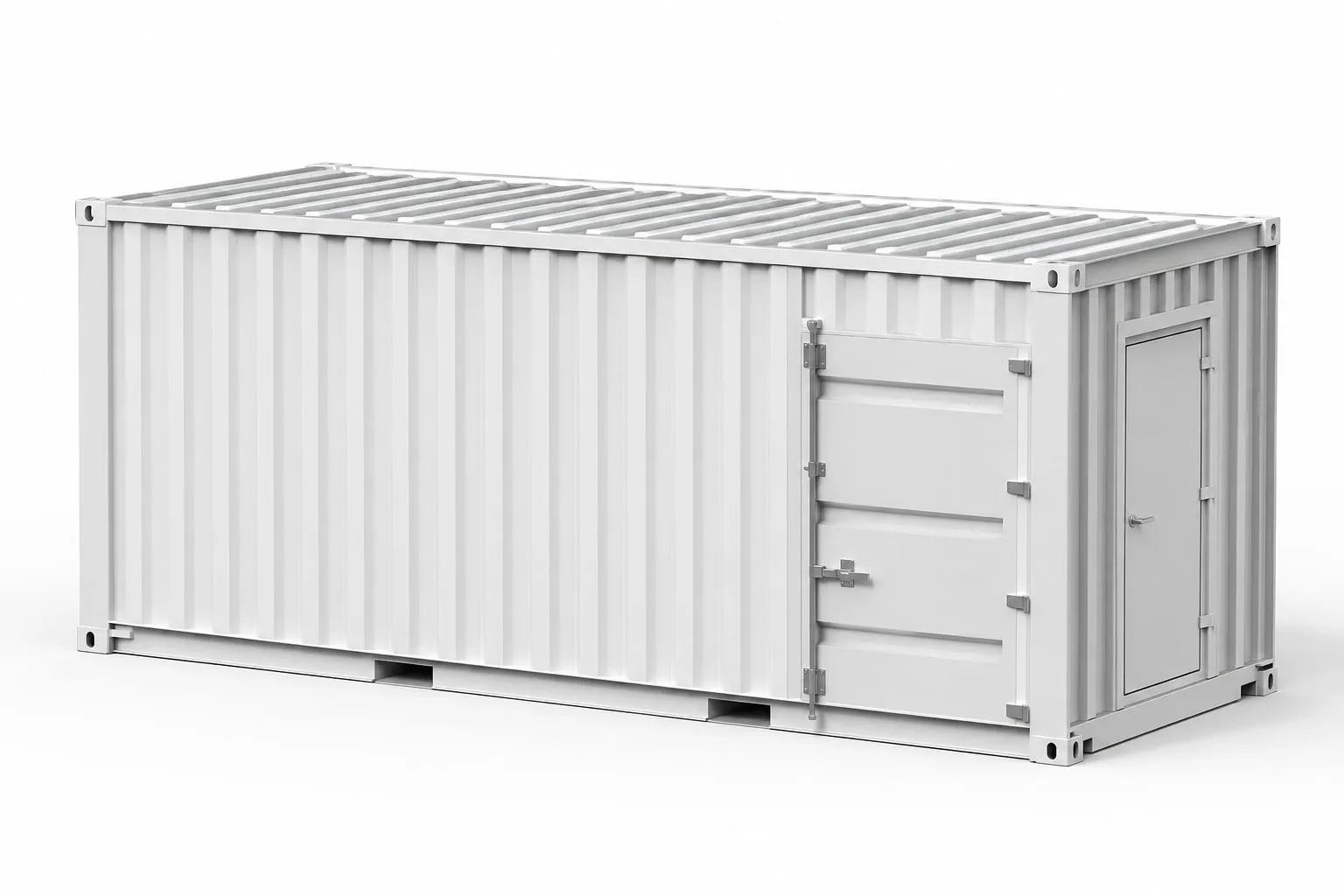
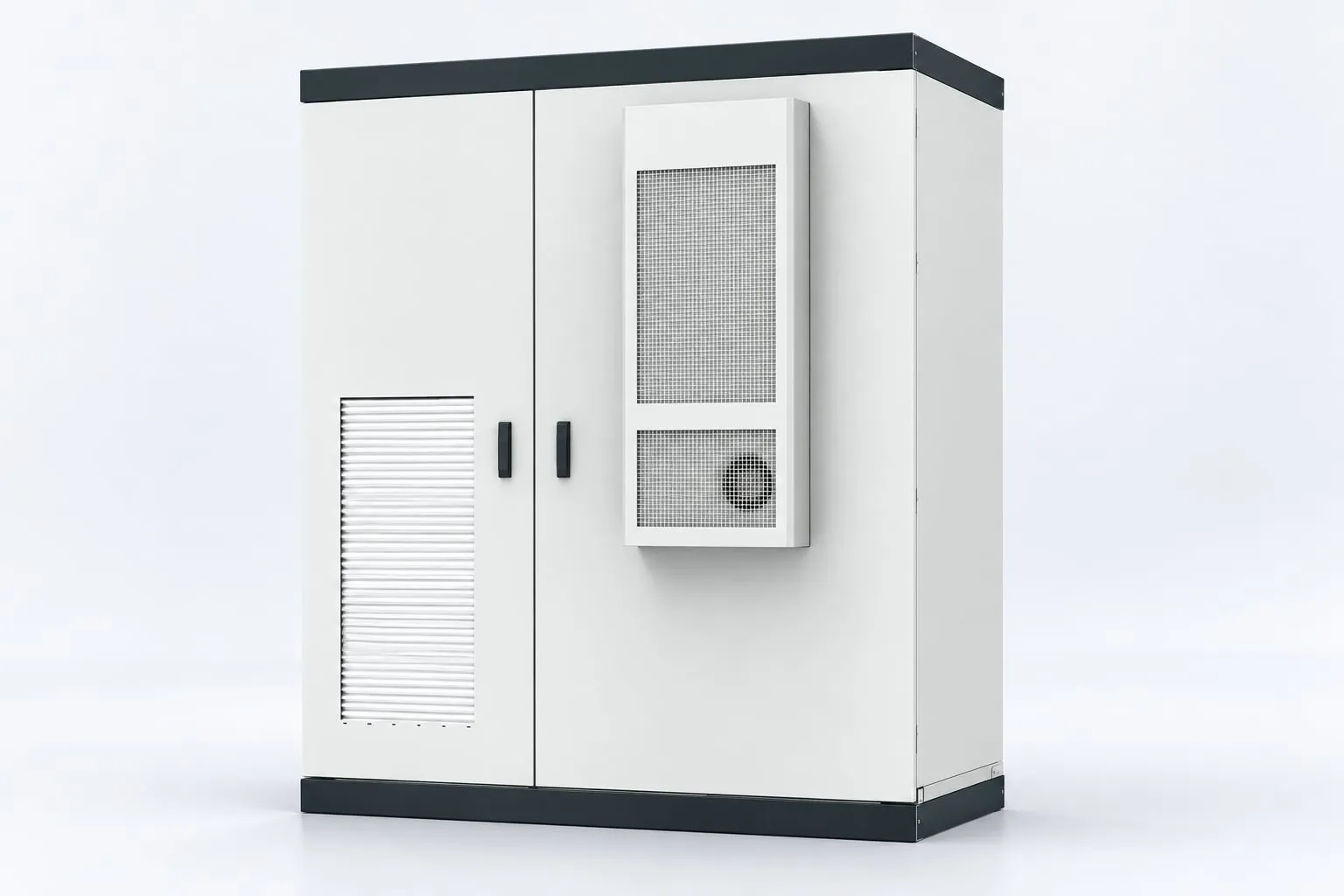
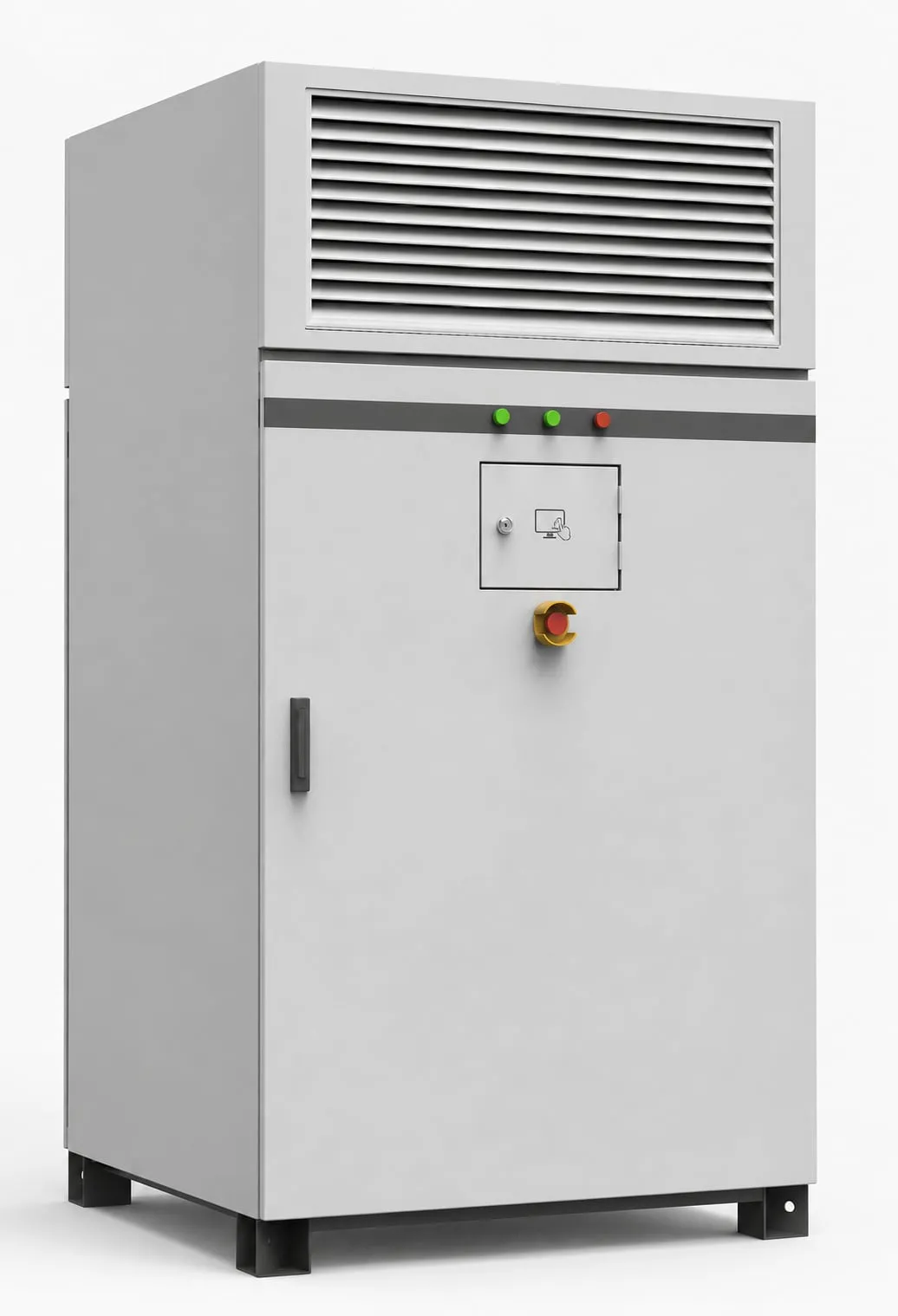
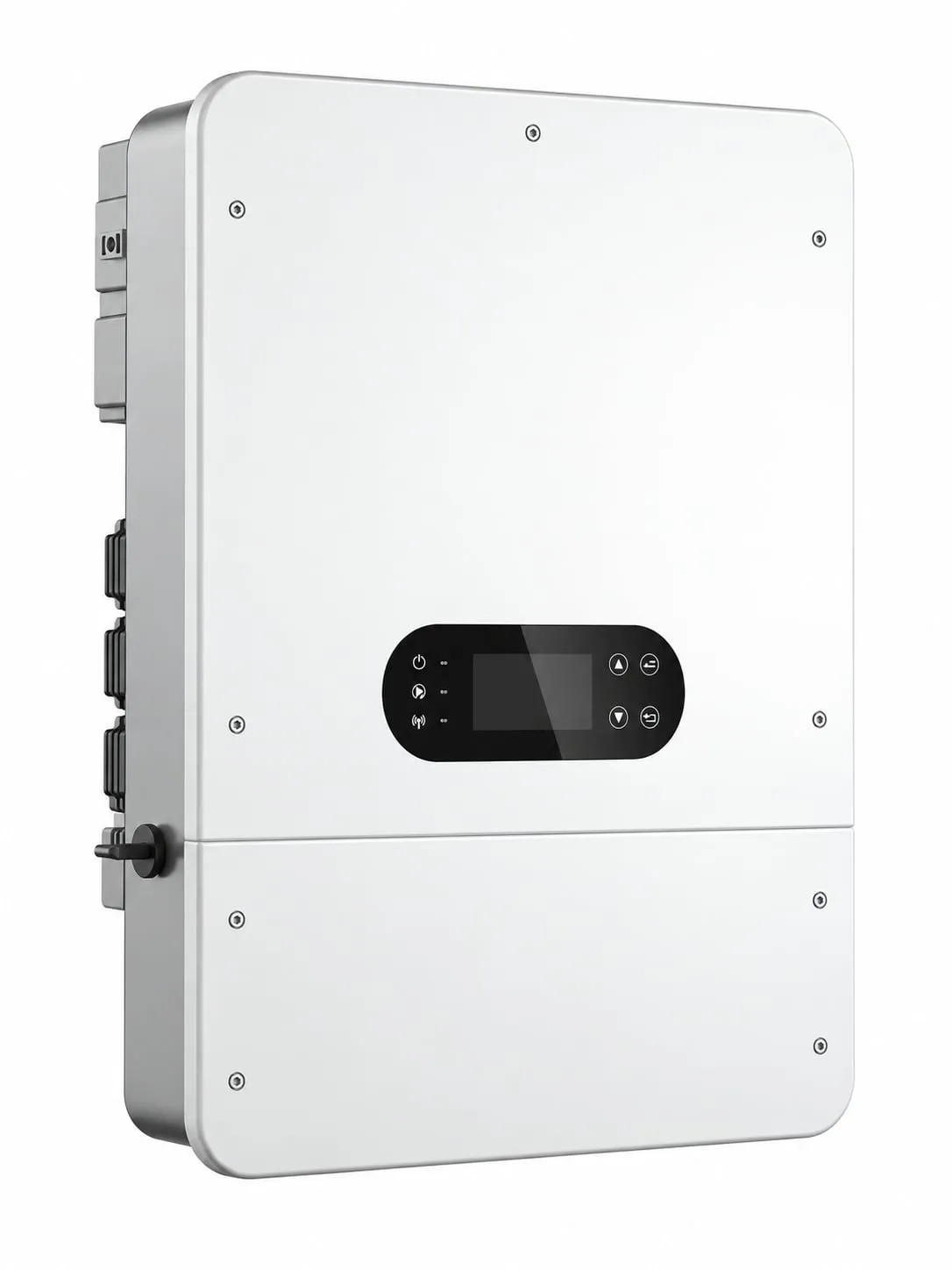
PV modules and structures, battery containers or cabinets, grid-forming PCS or hybrid inverters, the microgrid controller, and remote monitoring over 4G or satellite — with training for your operators.