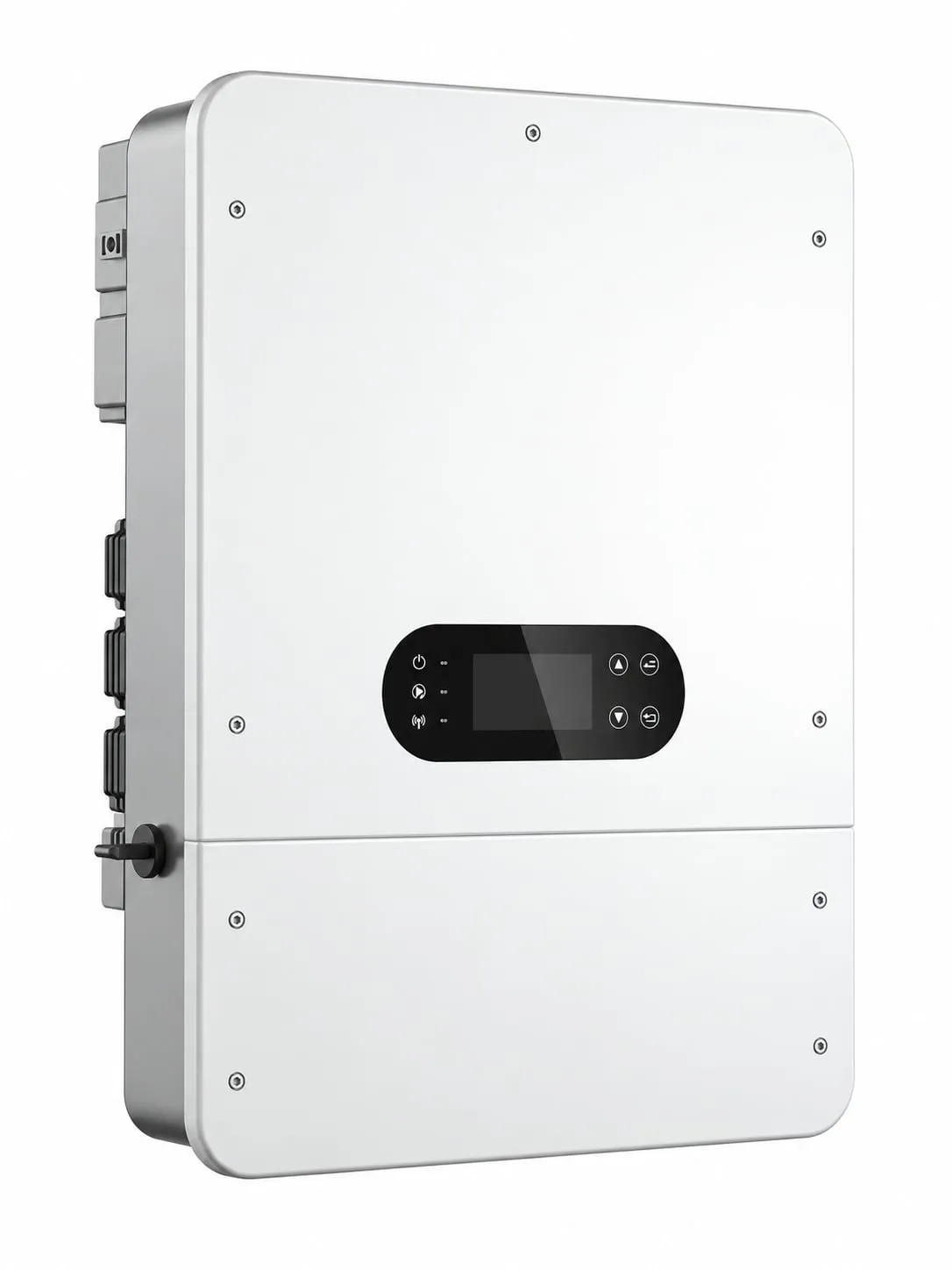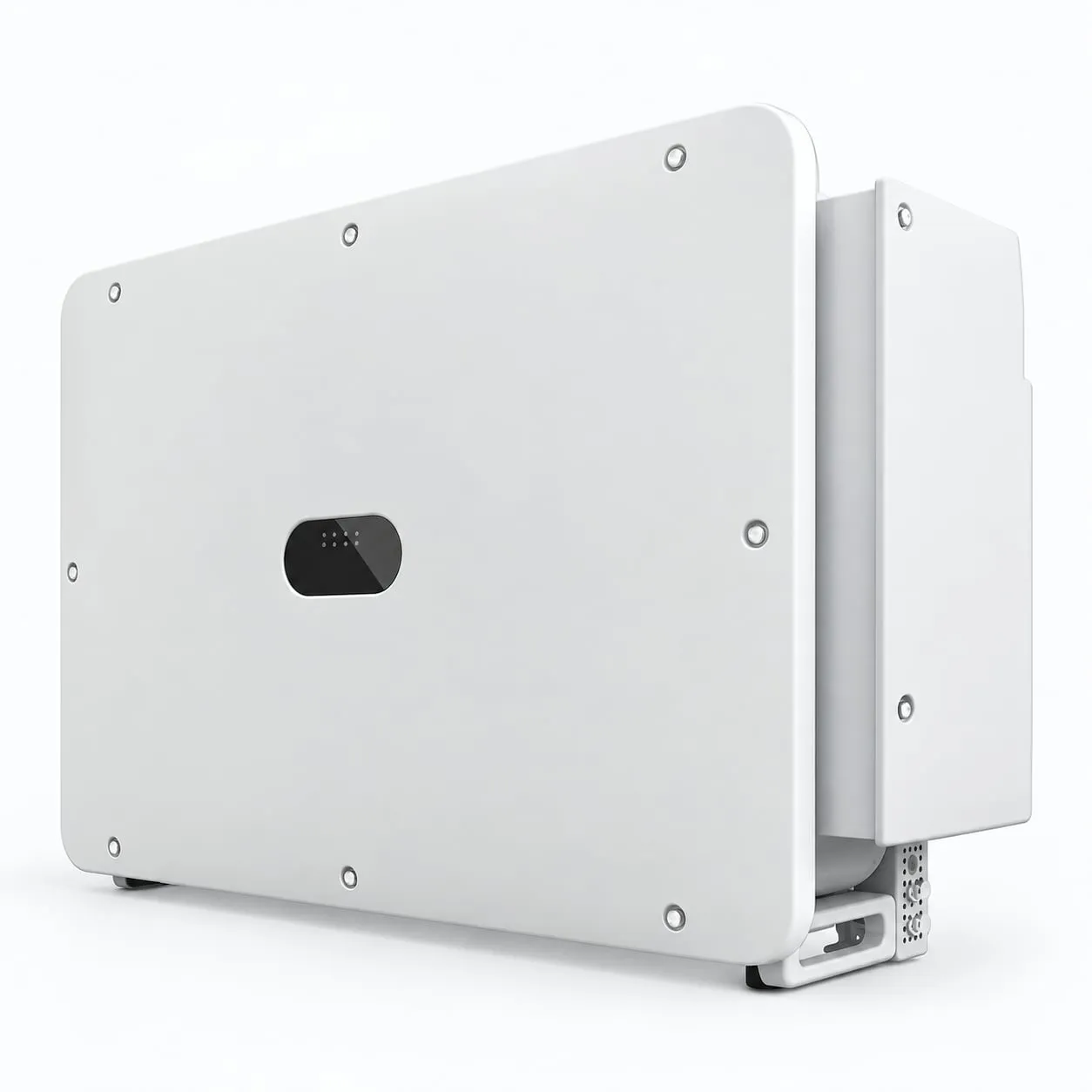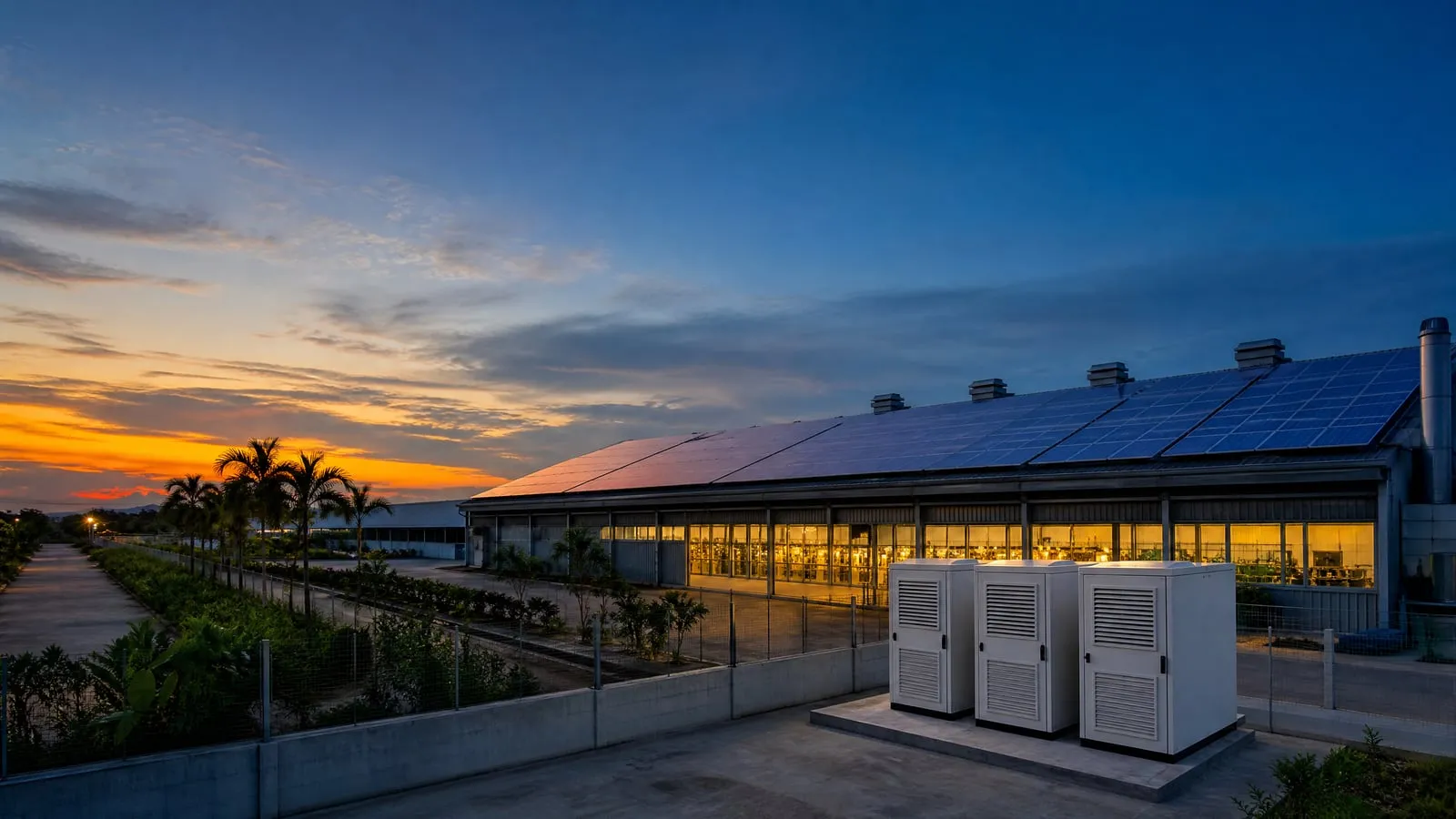
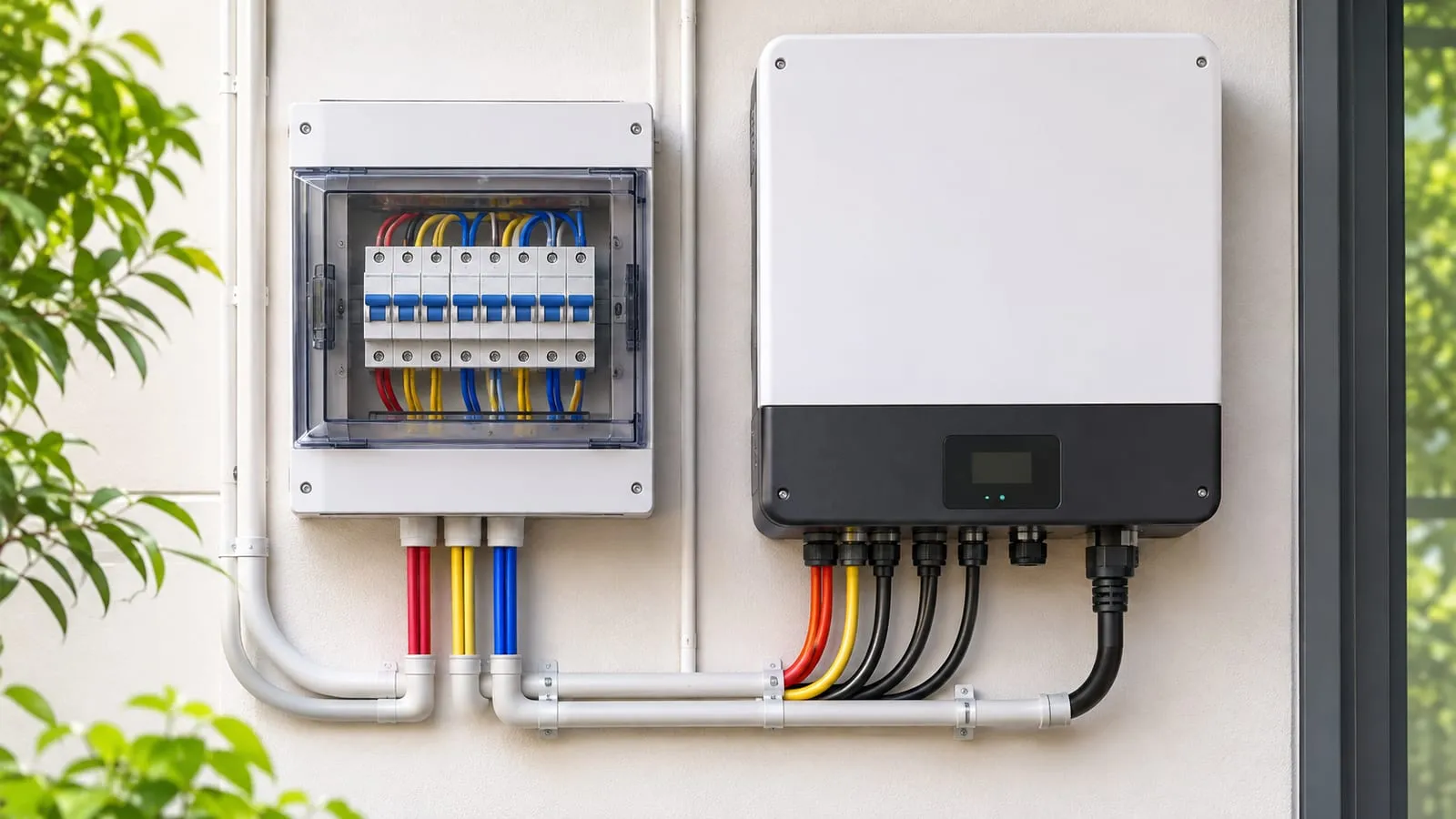
Short answer: Choose the hybrid inverter that matches your supply at the distribution board: single-phase (230 V class), split-phase (120/240 V, common in the Americas) or three-phase (230/400 V class). Then check how the model behaves in a backup situation — some three-phase hybrids back up all three phases, others only one. Ask for the datasheet of the exact model.
Quick guide
| Supply | Typical voltage | Typical hybrid sizes (our range) | Common in |
|---|---|---|---|
| Single-phase | 220–240 V | 3–5 kW | Africa, Europe, Asia, homes and small shops |
| Split-phase | 120/240 V | 3.5–5 kW, 10–12 kW | North America and parts of Latin America |
| Three-phase | 380–415 V line, 220–240 V phase | 15–30 kW, 100 kW | Factories, farms, larger buildings |
What changes with the supply
- Single-phase: simplest; one backup output; fine for most homes.
- Split-phase: two 120 V legs and a 240 V line; the inverter must support split-phase output and the right neutral arrangement.
- Three-phase: balances load across phases; some models give three-phase backup, others single-phase backup from a three-phase unit.
Backup behaviour to ask about
- Does backup cover all phases or one?
- What is the unbalanced-load limit per phase?
- What is the switch-over time (important for computers and servers)?
- Can it run parallel units for more power?
How to tell which supply you have
| Clue | Likely supply |
|---|---|
| One live wire and one neutral at the meter; nominal 220–240 V | Single-phase |
| Two live wires (each about 120 V to neutral) giving 240 V between them | Split-phase |
| Three live wires and neutral; 380–415 V between lines | Three-phase |
| A three-pole main breaker | Three-phase |
| A two-pole main breaker with 120 V circuits | Split-phase |
Ask the utility or an electrician if you are not sure; wiring changes between buildings.
Backup behaviour in detail
| Question | Why it matters |
|---|---|
| Does the inverter back up all three phases, or only one? | A three-phase motor needs all three |
| What is the maximum unbalanced load per phase? | A hybrid may allow only a fraction of rated power on a single phase |
| Is the backup port separate from the grid port? | Required for an essential-loads panel |
| What is the transfer time? | Computers and servers need very short transfer |
| Can the inverter run in parallel for more power? | Growth path |
Example: a 10 kW three-phase hybrid may offer only about 3.3 kW per phase during backup. A 3 kW single-phase load then fits comfortably; a 5 kW welder on one phase does not.
Split-phase specifics
- Two 120 V legs allow 120 V and 240 V appliances.
- The neutral (centre tap) must be wired correctly; an error damages appliances.
- Inverters made for the market state “split-phase output” and 120/240 V; do not assume a single-phase 230 V model can be converted.
Three-phase specifics
- Check the grid-connection rules for phase balance and export limits.
- For three-phase motors, ask for the starting current and soft-starter advice.
- Batteries for three-phase hybrids are often high-voltage; check the exact pairing list.
Choosing by building type
| Building | Typical supply | Typical hybrid |
|---|---|---|
| Apartment or small house in Africa, Asia, Europe | Single-phase | 3–5 kW single-phase |
| House in the Americas | Split-phase | 5–12 kW split-phase |
| Shop with several air conditioners | Single or three-phase | 5–15 kW |
| Small factory or farm | Three-phase | 15–30 kW three-phase |
| Large commercial roof | Three-phase | 50–100 kW commercial hybrid or string + storage |
Documents to send for a recommendation
- Photo of the meter and main breaker.
- Photo of the distribution board with labels.
- List of three-phase equipment.
- Desired backup circuits.
See our hybrid inverter range and what a hybrid inverter is.
Common mistakes
- Buying a single-phase inverter for a three-phase board and expecting to run three-phase motors.
- Forgetting that a motor on one phase of a three-phase inverter limits unbalanced output.
- Ignoring the local grid code for connection of larger hybrids.
See our hybrid inverters and commercial solar + storage systems.